The Great Creator Taxonomy - What even is a Content Creator?
This is a companion article to the Creator Taxonomy video and first episode of the Looong View
The most frequent question I get when I talk about content creators is: Who is a creator?
I've compared them to athletes in the past because there are many similarities. But calling everyone who uploads a video to YouTube a "Creator" is like calling Usain Bolt, Max Verstappen and Cristiano Ronaldo "Athletes." While technically true, it ignores the vast differences in their training, their goals, and what a win looks like.
For Creators, we’ve labeled them based on what they talk about: Tech, Beauty, Gaming, Lifestyle …
But as the Creator Economy matures this niche based labeling tells you nothing about the Creator’s scope, style or size.
A “Tech Creator” might have a 20 person team, a studio, merch line and collaborations with other media brands. They could also work by themselves with not much more than a laptop and fund their work through patreon.
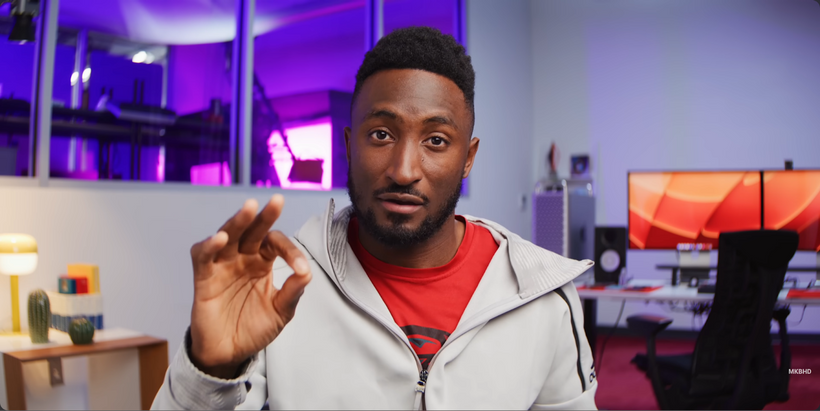
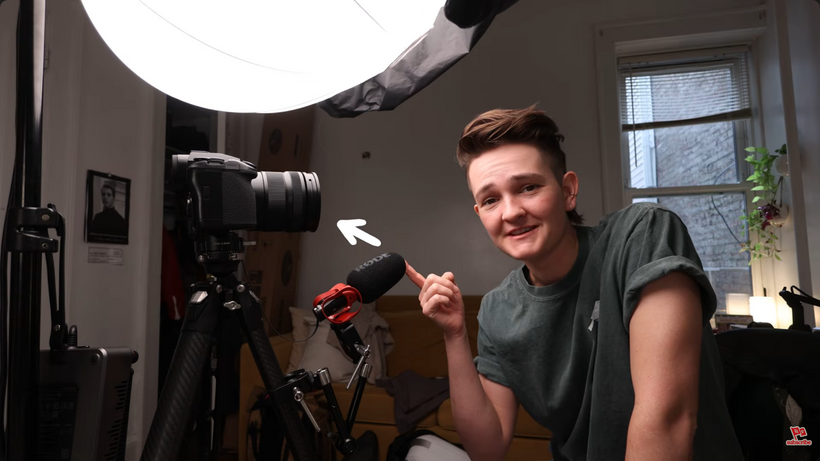
Same genre. Completely different game.
And this isn't just a vanity problem. The lack of vocabulary is costing everyone involved.
Brands waste money partnering with the wrong type of creator because they picked by topic instead of by operating model.
Creators burn out copying the tactics of someone in their niche who is playing a fundamentally different game.
And journalists, analysts or anyone trying to make sense of this industry can't have a meaningful conversation about the creator economy because we don't have a shared language for it. So every discussion collapses into "MrBeast vs. everyone else."
We're stuck because we have one word — "Creator" — for everyone in a multi-billion-dollar-industry.
Luckily this problem has been solved before.
Think of photography
When someone tells you they're a photojournalist, you immediately know a set of things about them.
They work on assignments or for publications. Their work prioritizes truth and timeliness over aesthetics. You'll find their photos in newspapers and magazines, not galleries. They probably don't sell prints to collectors.
When someone tells you they're a fine art photographer, the entire picture flips. They work on personal projects over months or years. Aesthetics and concepts drive everything. You find their work in galleries, museums, and private collections. Their business model is built on sales, grants, and commissions.
Same camera. Same core skill set. Completely different universe of intent, business model, and audience relationship.
Now compare that clarity to: "I'm a tech creator."
What does that tell you? Almost nothing. Not how they make money. Not how big their team is. Not what success looks like to them. Not how to work with them.
Photography didn't need this taxonomy when cameras were invented. In the early days, simply knowing how to operate the machine made you a "photographer." But as the medium matured, distinct categories evolved because there were suddenly fundamentally different reasons why someone was holding a camera.
The Creator Economy is at that exact inflection point right now. It's a vast landscape with creators who employ hundreds of people, creators who are really just marketers, and TV networks acting as creators. Continuing to lump them all together isn't just imprecise — it renders the word 'creator' completely meaningless.
So here is my attempt at a solution.
A classification system for creators — not based on what they talk about, but on why they exist, heir primary motivation and their win condition. The game they're actually playing.
Once you see it, you can't unsee it. You'll be able to watch any creator for 30 seconds and identify what game they're playing, what their real business model is, and what "winning" means to them. You'll stop comparing creators who share a niche and start comparing creators who share a motivation — which is where the actual patterns live.
A quick note before we go deep: The examples in this piece are based on YouTube because it's the most mature and diverse creator platform but that's the whole point of classifying by motivation instead of by platform or niche. An Individual is an Individual whether they post on YouTube, TikTok, or Instagram. A Views Maximizer plays the same game everywhere. The platform changes. The motivation doesn't.
Here is the Great Creator Taxonomy:
I. The Creators (Personality-Driven)
These categories rely on a specific human connection. The audience is here for the person as much as the content.
1. The Individual
Motivation: Self-Expression, Connection, & Community.
This is what most people think of when they hear the word "YouTuber." For The Individual, the content is the person. They are fueled by the need to create, and they would likely be making videos even if no one was watching. Their engagement is deep, personal, and parasocial.
However, "The Individual" is not a monolith. They come in distinct flavors:
The Artisan: Focused on craft and process.
Examples: Laura Kampf, Colin Furze, Nerdforge.
The Journalist: Focused on storytelling and information.
Examples: Johnny Harris, Cleo Abram.
The Personality: Focused on relatability, humor, and "hanging out."
Examples: Emma Chamberlain, Ryan Trahan.
The Instructor: Focused on active participation.
Examples: Qigong with Kseny, Fit Green Mind.
The Vibe: "I made this because I love it, and I hope you do too."
2. The Views Maximizer
Motivation: Virality, Retention, & "Beating the Game."
These creators treat YouTube like a competitive sport. They are playing for the high score. Their content is often high-budget, high-stakes "spectacle" designed for mass appeal. They obsess over analytics, A/B testing thumbnails, and optimizing every second of footage to prevent drop-off.
The Model: High production value, broad appeal. The creator TV channels.
Examples:
MrBeast, Mark Rober, Michelle Khare.
The Vibe: "I spent 50 hours in a glass box so you don't click away."
3. The Creator-Entrepreneur
Motivation: Business Scaling & Diversification.
This creator started as a personality but evolved into a CEO. The YouTube channel is no longer the end product; it is the top-of-funnel marketing engine for a diversified portfolio that includes a portfolio of products. They build teams to ensure the business survives the founder.
The Model: A company that understands how content builds trust.
Examples:
Linus Tech Tips, MKBHD, Cassey Ho, Sorted Food
The Vibe: "Come for the video, stay for the ecosystem."
4. The Icon
Motivation: Legacy & Control.
These are global celebrities—athletes, actors, musicians—who import their massive existing audience onto the platform. They skip the "discovery" phase entirely. For them, YouTube is a way to control their own narrative without the filter of traditional media or PR agents.
The Model: "I’m huge everywhere else, now I’m huge here too."
Examples:
Cristiano Ronaldo, Jack Black, Brie Larson,
5. The Operator
Motivation: Passive Income & Efficiency.
The Operator is functional. They often remain faceless, "mining" YouTube for AdSense checks or using it build up an audience to just to sell the account. They aren't looking for fame; they are looking for SEO ranking and volume.
Examples:
Medieval Way, Healing Me, Moon Mind Temple
II. The Entities (Business-Driven)
These categories rely on utility, inventory, or sales. The video is a means to an end.
6. The Commercial Brand (The Marketer)
Motivation: Sales & Lead Generation.
For the Commercial Brand, views are vanity; sales are sanity. The channel exists exclusively to sell a non-media product, such as software, consulting, or supplements. A video with 1,000 views that sells 50 high-ticket items is a massive success.
The Model: Content marketing.
Examples:
Alex Hormozi, Ed Lawrence, Marie Forleo, Codie Sanchez
The Vibe: "Click the link below to sign up."
7. The Broadcaster (The Network)
Motivation: Distribution & Reach.
These are traditional media companies, sports leagues, or digital publishers. They use YouTube as a secondary screen for their Intellectual Property (IP). They want to maximize ad inventory and keep their brand relevant in a digital age.
The Model: "Watch the highlights here, subscribe to our app for the rest."
Examples:
Late Night with Seth Meyers, The Tonight Show, The Kelly Clarkson Show
Network: NBA, Netflix, F1
III. The Messengers (Voice-Driven)
These categories use YouTube as a vehicle for a message or conversation hosted elsewhere.
8. Streamer & Podcaster
Motivation: Discovery & Influence.
These creators use YouTube primarily as a search engine to drive traffic to another platform, like Spotify or Twitch. YouTube serves as an archive for long-form content or a highlight reel to capture new listeners.
Sub-Types & Examples:
The Podcaster:
Joe Rogan, , Call Her Daddy
The Streamer:
Ludwig, IShowSpeed, Pokimane.
IV. The Parallel Economies (Mode-Driven)
These sectors operate with fundamentally different user behaviors and business models. They are on YouTube, but they are playing a different game entirely.
9. The Kids Network
Behavior: Passive, High-Repetition, Infinite Loop.
The customer is the parent who needs a break. Monetization here is rarely about AdSense (due to laws) and almost entirely about selling toys and merchandise.
Examples:
Ryan’s World, cocomelon
10. The Musician
Behavior: Audio-First, Background Listening.
Users treat YouTube as a free version of Spotify. The only thing that matters is Replay Value.
Examples:
The Weeknd, Justin Bieber, Taylor Swift, BLACKPINK
Summary: The "Win Condition" Litmus Test
To categorize any channel (or yourself), don't just look at the content. Look at the goal. Ask: "What are they actually aiming for?"
The Individual: Aims for Deep Connection.
The Views Maximizer: Aims for Maximum Attention.
The Entrepreneur: Aims for Enterprise Value.
The Icon: Aims for Cultural Relevance.
The Brand: Aims for Customer Acquisition.
The Broadcaster: Aims for Mass Distribution.
The Operator: Aims for Passive Efficiency.
The Kids Network: Aims for Infinite Loops.
The Musician: Aims for Replays.
Stop asking "What do they make?" and start asking "What game are they playing?" Only then does the creator economy make sense.
This article is the deep-dive companion to my latest video, where I break this taxonomy down specifically for YouTube Creators. You can watch the full breakdown on Orbit for Creators
Author:
I'm Valentin, the European Creator Guy, the host of Orbit for Creators and founder of the creator trust klub.
I obsess over the creator landscape so you don't have to.
If this framework helped you see the industry more clearly, let's stay connected:
Valentin Farkasch on LinkedIn